Across 694 classes in 13 weeks (24 August to 22 November 2026), one reformer and barre studio sold 59% of its spots: 53% on reformers, 65% in mat and barre. Weekday 9am and Monday 10am classes ran at 85 to 95%, while 8am and lunchtime slots averaged around a third. 111 classes sold out while 139 (20%) ran with two people or fewer, and 918 empty spots sat within three hours of a sold-out class. Weekly bookings held steady at about 300 while the timetable grew, so fill fell from 75% to 58% in a year.
Why we did this
Most published “average fill rate” figures come from software companies describing their own customers, rarely say how they were measured, and almost never show the timetable underneath. We wanted the opposite: one real studio, every class, slot by slot, with the method written down, so that owners can compare their own week with something concrete.
This is a single-studio study, not an industry benchmark. We’re building a multi-studio version for 2027 (see the end of this page). But a single timetable measured properly says a lot, because the patterns in it are ones almost every boutique studio owner will recognise.
The headline numbers
| Measure | Result | Period |
|---|---|---|
| Classes measured | 694 | 24 Aug to 22 Nov 2026 (13 weeks) |
| Share of spots booked, all classes | 59% | Same |
| Reformer classes (8 beds) | 53% | Same |
| Mat and barre classes | 65% | Same |
| Classes that sold out | 111 (16%) | Same |
| Classes with 2 people or fewer | 139 (20%) | Same |
| Empty spots within 3 hours of a sold-out class | 918 | Same |
| Empty spots, average per week | 209 | Same |
| Spots offered per week | About 507 | Same |
| Bookings per week | About 300, steady since autumn 2025 | Jun 2025 to Nov 2026 |
| Highest monthly fill | 75% | November 2025 |
| Lowest monthly fill | 53% | July 2026 |
Finding 1: the same hour can be full or empty, depending on the day
The heat map below shows every reformer slot that ran at least four times. The most striking thing isn’t that some times are busy and others quiet; it’s how much the same hour varies across the week.
| Mon | Tue | Wed | Thu | Fri | Sat | Sun | |
|---|---|---|---|---|---|---|---|
| 08:00 | 48%3.8/8 | 24%1.9/8 | 53%4.2/8 | 26%2.1/8 | 27%2.2/8 | ||
| 09:00 | 91%7.3/8 | 65%5.2/8 | 85%6.8/8 | 62%5.0/8 | 69%5.5/8 | 57%4.5/8 | 43%3.5/8 |
| 10:00 | 95%7.6/8 | 52%4.2/8 | 52%4.2/8 | 25%2.0/8 | 78%6.2/8 | 54%4.3/8 | 75%6.0/8 |
| 11:00 | 60%4.8/8 | 69%5.5/8 | |||||
| 12:00 | 58%4.6/8 | 28%2.2/8 | 33%2.7/8 | 44%3.5/8 | 66%5.3/8 | 45%3.6/8 | 69%5.5/8 |
| 13:00 | 28%2.2/8 | 35%2.8/8 | 28%2.2/8 | 58%4.7/8 | 47%3.8/8 | ||
| 17:00 | 23%1.9/8 | ||||||
| 19:00 | 43%3.4/8 |
Slots that ran at least four times between 24 August and 22 November 2026. Big number: average share of beds booked. Small: average beds booked of 8. Booked spots on the public schedule, not attendance.
- 10:00 ran at 95% on Mondays and 78% on Fridays, but 25% on Thursdays.
- 09:00 was the strongest hour overall: 91% on Monday, 85% on Wednesday, and never below 43% even on Sunday.
- 12:00 ranged from 28% on Tuesday to 66% on Friday and 69% on Sunday.
- 08:00 averaged about 36% across the five weekdays it ran, with Tuesday, Thursday and Friday all under 30%.
- 13:00 averaged about 39%, with only Thursday above half full.
The lesson for any studio: judge each slot on its own day, not the hour across the week. A “lunchtime problem” is often a Tuesday-and-Wednesday lunchtime problem. See how to plan a timetable.
Finding 2: sold-out classes and near-empty ones, side by side
In the same 13 weeks, 111 classes sold out and 139 ran with two people or fewer. That’s one in six classes turning people away and one in five barely running, in the same building, often on the same morning.
The most useful number in the study is this: 918 empty spots sat within three hours of a class that had sold out. These were people who wanted a class that morning or afternoon, and a spot that existed nearby. A timetable that offered the nearest class with space at the moment of “class full” could have turned a share of those into bookings. See waitlist best practice.
One Wednesday in November, as booked on the Monday before: both 09:00 classes were already full (12 of 12 in barre, 8 of 8 on reformers). The 10:00 reformer class had 0 of 8 booked and the 10:00 mat class 0 of 10. At 12:00, one reformer class had 0 of 8 and barre 2 of 12; the 13:00 reformer class had 0 of 8. Some of those will have filled by Wednesday, but on Monday the people who wanted 09:00 had nowhere to go, an hour before eight empty beds.
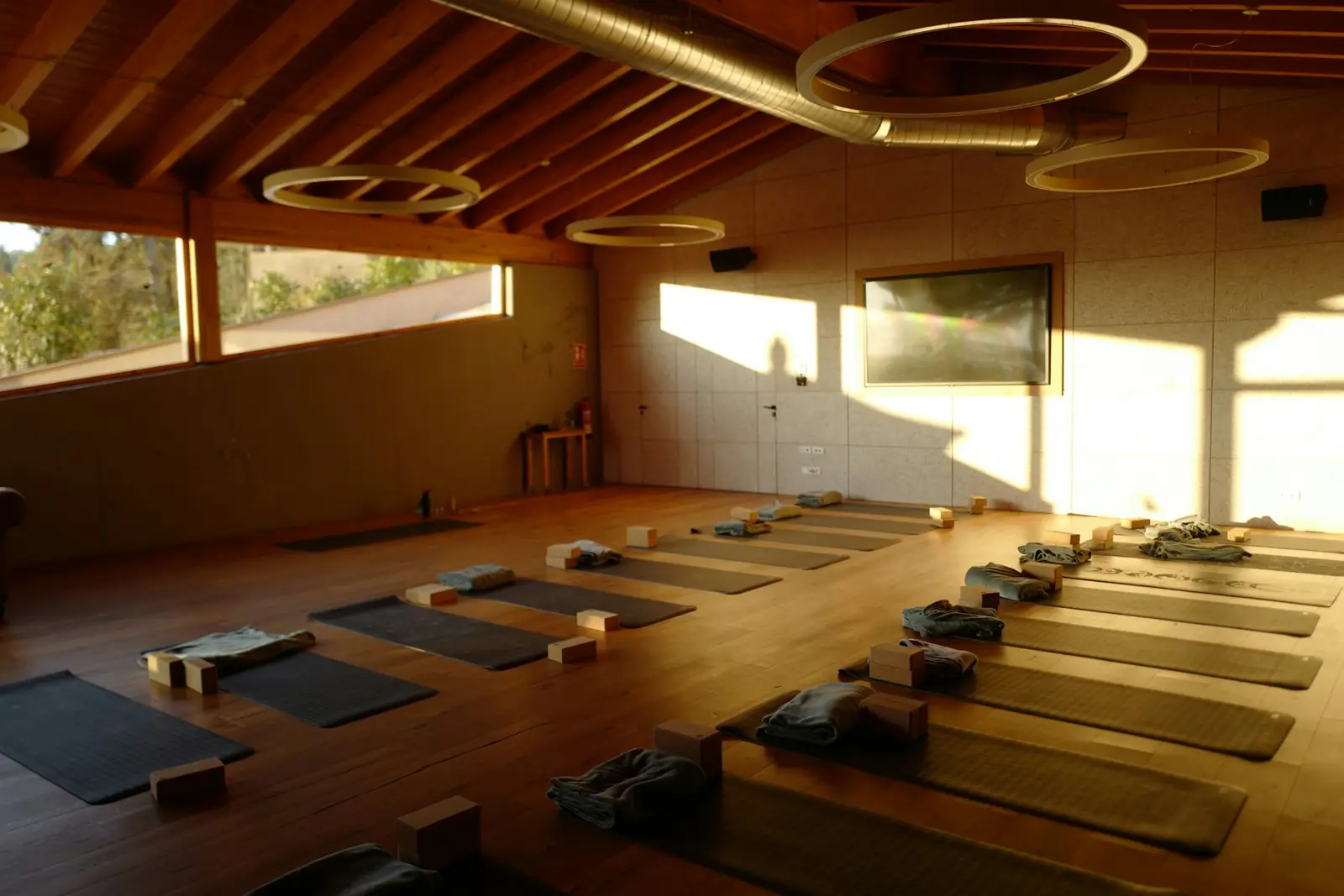
Real classes at one reformer studio, 24 August to 22 November 2026. See the study.
Finding 3: more classes didn’t mean more bookings
The monthly chart shows the longer story. Fill was in the high 60s and low 70s through autumn 2025, peaking at 75% in November 2025. Since then, the studio added classes, but weekly bookings held at about 300. More spots, the same demand: fill drifted down to 58%.
25
26
26
June 2025 to 22 November 2026 (November 2026 is part of the month). All classes on the public schedule: reformer, mat and barre. Weekly bookings held at about 300 from autumn 2025 while the timetable grew, so fill fell.
That’s a common pattern. Adding classes feels like growth, but each new slot competes with the existing ones unless something brings in new demand or moves existing members into it.
Finding 4: what the empty spots are worth
At 507 spots a week and a blended price of €22.50 a spot (the studio’s 10-class pack price), each point of fill is worth about €5,900 a year. Moving from 59% to 64%, five points and still well below the studio’s own 75% of a year earlier, would be worth about €29,500 a year, with no extra classes, teachers or rent.
| Fill | Extra spots a week | Extra revenue a year at €22.50 |
|---|---|---|
| 59% (today) | – | – |
| 64% | +25 | about €29,500 |
| 69% | +51 | about €59,000 |
| 75% (its own level a year ago) | +81 | about €95,000 |
These are illustrations from public data, not a forecast: the real price paid per spot depends on the mix of memberships, packs and intro offers.
What this means for your studio
- Look at your slots by day, not by hour. Build your own heat map from your booking export. The worst cells are your first fixes. See how to fill off-peak classes.
- Count sold-out classes and near-empty ones in the same week. If both numbers are high, you don’t have a demand problem; you have a distribution problem.
- Offer the nearest class when one is full. At the moment someone sees “class full”, show the next class with space.
- Merge before you add. Slots that average two or three people for a quarter are candidates to merge or move into a time that sells out.
- Price the quiet hours. A visible off-peak price for 08:00 and lunchtime slots is the honest way to move demand. See dynamic pricing for studios.
- Track fill monthly against last year. A slow drift is easy to miss week to week. See studio KPIs.
Method
- Source. The studio’s public online booking schedule, which shows, for each class, the number of spots booked and the capacity. We recorded every class between 24 August and 22 November 2026, and monthly totals of spots offered and booked from June 2025.
- Fill. Spots booked ÷ spots offered, added up across classes (not an average of class percentages).
- Booked, not attended. The schedule shows bookings. Late cancellations and no-shows aren’t visible, so attended fill is likely lower.
- Slots. The heat map includes reformer slots (8 beds) that ran at least four times in the period. Averages per slot are simple means across those classes.
- Sold out. Every spot booked at class time.
- Within three hours. An empty spot in any class starting up to three hours before or after a sold-out class at the same studio.
- Value. Extra points of fill × 507 spots a week × €22.50 × 52 weeks.
- Anonymity. The studio isn’t named and class names are removed. It’s a boutique reformer, mat and barre studio.
- Limits. One studio, one region, one booking system, 13 weeks of class-level detail. Treat it as a case study, not an average for the industry.
Help build the 2027 Fill Index
We’re extending this study to dozens of boutique studios across Portugal, the UK and Europe, anonymised and published free each year. Studios that take part get their own slot-by-slot heat map and their position against the group, privately. If you’d like your studio included, ask for a free forecast and mention the Fill Index.
How to cite this study
Fortitude Flow (2026). What 694 classes at one reformer studio show about filling a timetable. Ross Williams. fortitudeflow.com/guides/reformer-class-fill-study. Data: 24 August to 22 November 2026.
Questions owners ask
Is 59% a normal fill rate for a reformer studio?
This study covers one studio, so it can’t tell you what’s normal. What it shows is that the same studio ran at 75% a year earlier with fewer classes, and that its sold-out and near-empty classes sat side by side, which suggests the gap is fillable.
Why is reformer fill lower than mat and barre here?
The study didn’t break mat and barre down slot by slot, so it can’t say why. The heat map shows the reformer timetable carried many early and lunchtime slots, which were its quietest.
Does this include no-shows?
No. It counts booked spots as shown on the public schedule. Attended fill would be lower by the share of late cancellations and no-shows.
Can I get the same analysis for my studio?
Yes. Send us your public timetable through the free forecast and we’ll return a slot-by-slot view within 48 hours.
Checked 24 November 2026. Prices and rules change, so check the source before you rely on a figure. This guide is general information, not legal, tax or financial advice.

Ross Williams is co-founder of Fortitude Media, the company in Cascais that makes Fortitude Flow. He has built subscription businesses online since 1998 and wrote Subscribe and Conquer, a playbook for them.