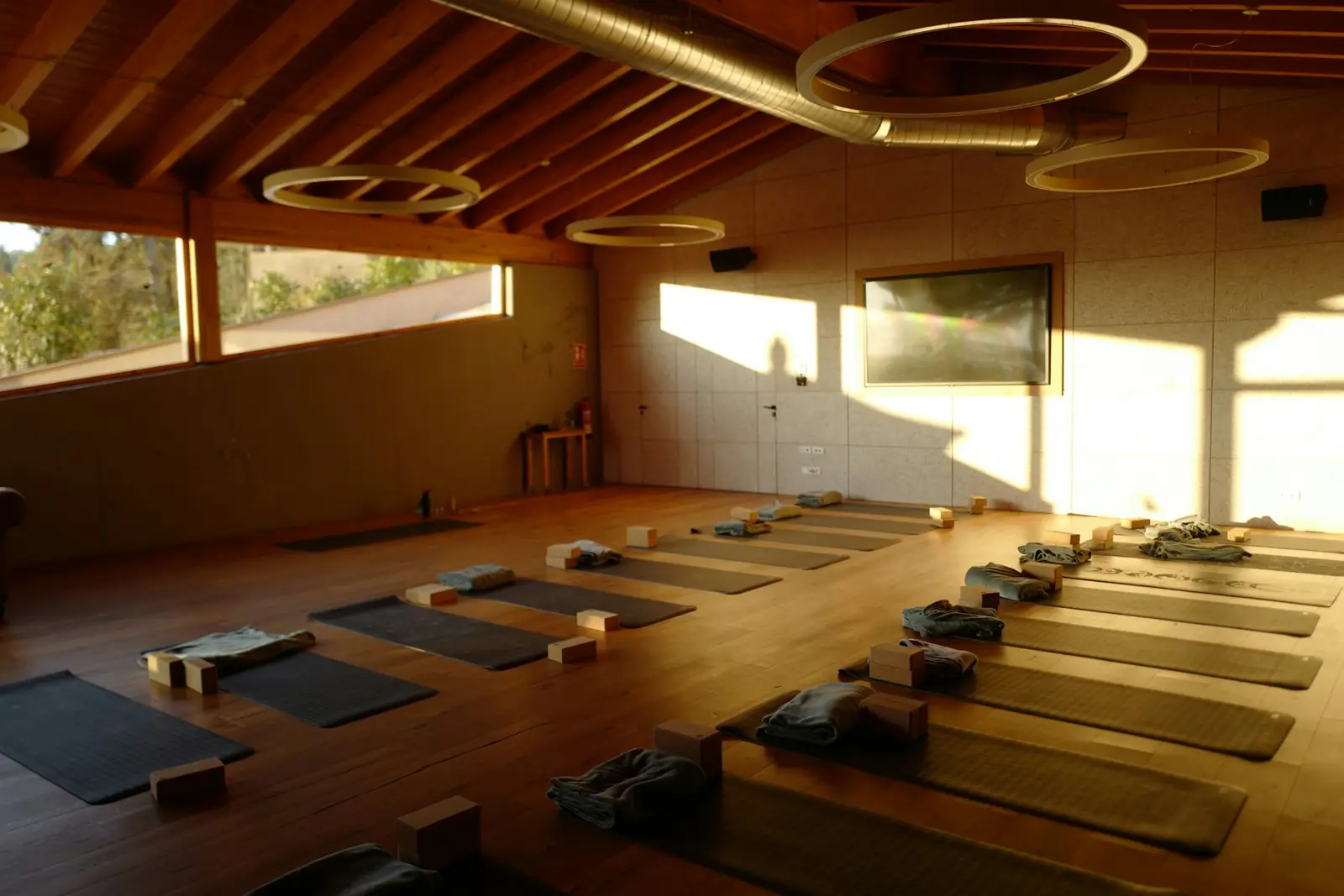
Choose a location where enough of your target members live or work within about 15 minutes, and can get there easily at peak times (before work, after work, weekend mornings). Then check the building: enough floor for your reformers or mats with walkways, a floor that takes the load, sound insulation, ventilation, changing space and visibility. Negotiate the lease: rent-free fit-out months, a break clause, and limits on rent reviews.
The 15-minute rule
Most members won’t travel far for a class they do two or three times a week. Map who lives and works within about 15 minutes by foot, bike, car or public transport, at 07:00 and 18:00 (not midday).
| Question | How to check |
|---|---|
| Who lives nearby? | Local census and housing data; walk the streets at 07:30 and 19:00 |
| Who works nearby? | Office buildings, hospitals, universities within walking distance |
| Can they get there at peak? | Parking after 18:00, bike racks, transport stops |
| Who already trains nearby? | Gyms, studios, running clubs: a sign of demand |
| Is it on their way? | Between home and work beats a detour |
Competitors are a good sign, within reason
A street with two studios proves people pay for classes there. Visit every competitor within 15 minutes: book a class, note prices, timetables, which classes are full, and what’s missing (early classes? beginners? a different style?). Your gap is your positioning.
The building checklist
- Floor plan fits your reformers or mats to scale, with walkways
- Floor can take the load (reformers are heavy; get a structural opinion for upper floors)
- Ceiling height for towers, or for raised arms in yoga
- Sound: neighbours above, below and beside; music and jumping
- Ventilation and cooling for a full room in summer
- Space for changing rooms, toilets and storage
- Natural light, or a plan for good artificial light
- Accessible entrance, or a realistic plan for one
- Planning and use class allow a fitness studio (check with the local authority)
- Signage allowed and visible from the street
- Internet and phone signal (for check-in and card payments)
Street level or upstairs?
| Street level | Upper floor | |
|---|---|---|
| Visibility | Walk-ins, window branding | Low; rely on signs and search |
| Rent | Higher | Lower |
| Noise and load | Easier | Neighbours below; floor load |
| Privacy | Needs window treatment | Natural privacy |
Many successful studios are upstairs. If you choose one, invest more in Google and AI visibility; see local SEO for studios.
Lease terms to negotiate
| Term | Why it matters |
|---|---|
| Rent-free period | Covers fit-out months before you earn |
| Break clause | A way out if the location doesn’t work |
| Length | Long enough to earn back the fit-out, short enough to limit risk |
| Rent reviews | Caps or fixed steps instead of open market reviews |
| Who pays for what | Building works, ventilation, repairs |
| Permitted use | Must clearly allow a fitness studio and music |
| Assignment | Can you sell the business with the lease? |
Have a lawyer review the lease. It’s the biggest commitment you’ll make.
Space A: 140 m², street level, €5,200 a month, fits 12 reformers. Space B: 120 m², first floor, €3,600 a month, fits 10.
| A | B | |
|---|---|---|
| Rent per reformer per month | €433 | €360 |
| Spots a week at 40 classes | 480 | 400 |
| Rent per available spot | €2.50 | €2.08 |
| Extra marketing needed (upstairs) | – | €500 a month |
| Rent + marketing per available spot | €2.50 | €2.37 |
B is slightly cheaper per spot even after extra marketing, but A’s visibility may bring more intro clients. The deciding question is whether A’s peak demand needs 12 beds.
Our assumptions, chosen to show the method. Put in your own numbers.
A location scorecard
Score each shortlisted space from 1 (poor) to 5 (excellent), then multiply by the weight.
| Factor | Weight | Space A | Space B | Space C |
|---|---|---|---|---|
| Target members within 15 minutes | 3 | |||
| Easy access at 07:00 and 18:30 (transport, parking) | 3 | |||
| Fits your planned reformers or mats with walkways | 3 | |||
| Rent as a share of realistic revenue | 3 | |||
| Visibility and signage | 2 | |||
| Sound, floor load, ventilation | 2 | |||
| Changing rooms and storage possible | 2 | |||
| Lease terms (break clause, rent-free, reviews) | 2 | |||
| Competition nearby (healthy, not saturated) | 1 | |||
| Natural light | 1 |
Counting demand before you sign
| Check | How |
|---|---|
| Walk the area at 07:00, 12:30 and 18:30 | Who’s out, what are they doing, where are they going? |
| Visit every nearby studio | Book a class; note what’s full and what’s empty |
| Look at their public timetables over two weeks | Which slots show “full” or “1 left”? |
| Ask local businesses | Cafés and physios know who’s around |
| Run pop-up classes nearby | Rent a hall for a few weeks; count sign-ups |
| Check search interest | How many people search for your type of class in the area? |
A public booking schedule shows how full each class is. We measured one studio’s schedule over 13 weeks: its Monday and Wednesday 09:00 classes ran at 85 to 91%, while three weekday 08:00 slots ran at 24 to 27%. Looking at nearby studios’ timetables the same way tells you which times already sell out in an area, and which don’t. See the fill study.
Real classes at one reformer studio, 24 August to 22 November 2026. See the study.
Area types and what they suit
| Area | Strong slots | Weak slots | Notes |
|---|---|---|---|
| Business district | 07:00, 12:30, 17:30–18:30 weekdays | Weekends, school holidays | Express classes at lunch |
| Residential, families | 09:00–10:30, evenings, weekends | Lunchtimes | Pre and postnatal, kids’ classes |
| Residential, young professionals | 07:00, 18:30–20:00, weekends | Mid-morning | Strong evening demand |
| Beach or tourist area | Seasonal; mornings | Winter | Visitors and residents; plan for seasonality |
| Mixed high street | Spread across the day | Late evening | Good for walk-ins and visibility |
Questions to ask the landlord
- Is a fitness studio a permitted use, with music?
- Who pays for building works, ventilation and repairs?
- What are the opening hours of the building (early mornings, weekends)?
- Are there noise restrictions or neighbours who’ve complained before?
- Can signage go on the building and the street?
- What’s the floor load, and is there a structural report?
- Is there a rent-free period for fit-out?
- Is there a break clause, and when?
- How are rent reviews calculated?
- Can the lease be assigned if you sell the business?
Moving later
A location that’s wrong is expensive to leave. If you’re unsure between two areas, consider a shorter lease with an option to renew, or starting with pop-up classes in rented halls before committing.
Questions owners ask
Should a studio be near a gym?
Being near gyms is fine: their members are active and some want something different. Being inside a gym’s catchment with the same offer at a higher price is harder.
How much rent can a studio afford?
Work backwards: rent as a share of the class revenue you can realistically reach. Use the break-even calculator with the rent of each space you’re considering.
Is a residential or business area better?
Residential areas fill mornings, evenings and weekends; business areas fill lunchtimes and early mornings but go quiet at weekends and in holidays. A mix is ideal.
Do I need parking?
It depends on how your members travel. In car-dependent areas, evening parking can decide whether your 18:30 class fills.
How close can I be to a competitor?
Close is fine if you serve a different audience or time. Directly copying a nearby studio’s offer at the same times is harder.
Is a ground floor necessary?
No. Many successful studios are upstairs. You’ll rely more on Google, reviews and AI search for discovery.
Should I buy rather than rent a property?
It’s a property decision as much as a studio one. Most first studios rent, to keep cash for equipment and working capital.

Ross Williams is co-founder of Fortitude Media, the company in Cascais that makes Fortitude Flow. He has built subscription businesses online since 1998 and wrote Subscribe and Conquer, a playbook for them.