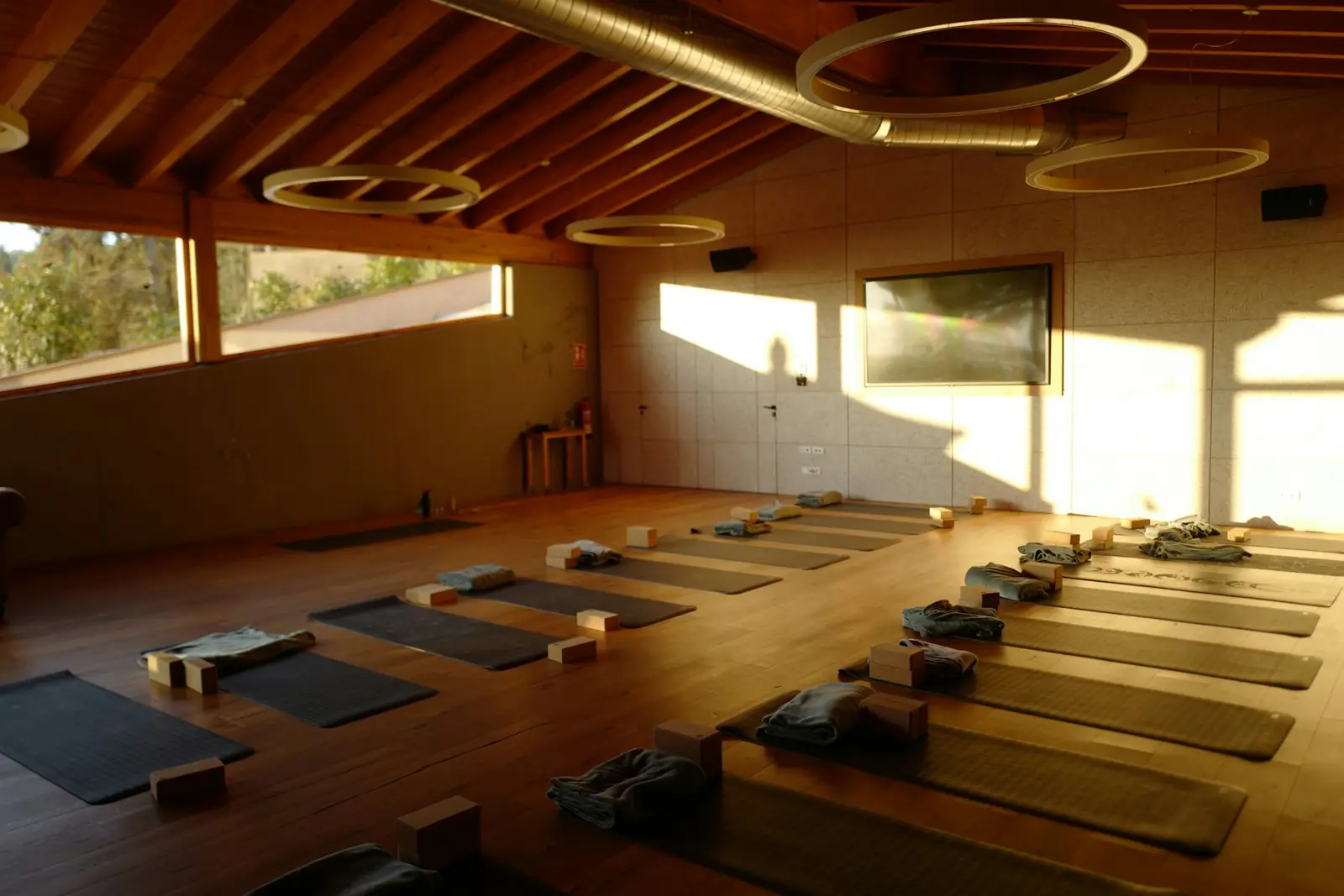
Pick a clear style and audience, then find a room that holds enough mats (often 15 to 30) close to the people you’re for. Keep fit-out lean: floor, light, heating or cooling, storage and changing space. Price with intro offers, packs and memberships, and plan income beyond classes from the start: workshops, teacher trainings, privates and retreats. Pre-sell founding memberships, choose booking software early, and track fill by class from the first week.
Step 1: style and audience
A yoga studio for “everyone” competes with every gym and app. A studio for a clear group (busy professionals before work, new parents, athletes, people who want slow and restorative practice, hot yoga lovers) is easier to find and easier to fill.
| Style | Room | Cost to open | Notes |
|---|---|---|---|
| Vinyasa and flow | Standard | Lower | Biggest audience, most competition |
| Hot yoga | Heated, humidity control, special flooring | Much higher | Heating and ventilation are a major cost |
| Yin, restorative | Standard; props | Lower | Suits evenings and off-peak |
| Ashtanga, Mysore | Standard | Lower | Loyal, early-morning audience |
| Pre and postnatal, kids | Standard | Lower | Daytime slots; partnerships with midwives and schools |
Step 2: the numbers
Yoga spots are cheaper than reformer spots, but rooms are bigger.
20 mats, 30 classes a week, 60% fill, €14 average paid per spot: 20 × 30 × 4.33 × 0.6 × €14 ≈ €21,800 a month. With rent and bills of €3,500, teachers at €30 a class (€3,900 a month) and other costs of €1,800, the studio clears about €12,600 before the owner’s pay and tax. At 40% fill it clears about €5,300.
Our assumptions, chosen to show the method. Put in your own numbers.
0%Break-even fill100%
- Class revenue a month
- –
- Costs a month
- –
- Fill you need to break even
- –
- Spots a week you need to sell
- –
- Months to earn back the fit-out
- –
- Each extra point of fill is worth
- –
A month is 4.33 weeks. Before tax, loan repayments and your own salary unless you put it in the costs. A planning tool, not financial advice.
Step 3: the space
- Floor area: each mat needs roughly 2 × 1 m plus space between; most teachers plan around 3 to 4 m² per student including walkways.
- Ceiling and light: natural light is lovely; blackout for evening and restorative classes too.
- Sound: neighbours, traffic, and the class next door.
- Temperature: heating for winter, cooling for summer; for hot yoga, specialist heating and ventilation.
- Storage for mats, blocks, bolsters and blankets.
See choosing a studio location.
Step 4: costs
A standard yoga studio’s big lines are the lease deposit, flooring, heating and ventilation, props, changing space and working capital. Hot yoga adds a large heating and ventilation bill; get specialist quotes early. Glofox’s guide puts a minimalist studio from about $24,000 and notes hot-yoga HVAC can exceed $100,000 (US figures, unsourced planning ranges).
Step 5: licences and admin
| UK | Portugal | |
|---|---|---|
| Registration | Sole trader or company; HMRC | Atividade or company; Finanças |
| Music | PPL PRS TheMusicLicence | SPA (authors) and Audiogest PassMúsica (producers and performers) |
| Insurance | Public liability, professional indemnity | Liability and accident insurance |
| Teachers | Recognised training expected by insurers | Check fitness-facility rules (Lei 39/2012) |
General information only; check with an accountant or lawyer. See opening a studio in Portugal.
Step 6: prices and offers
Typical yoga pricing includes an intro offer (a week or a few classes), drop-ins, 5 and 10-class packs, and monthly unlimited memberships, plus workshop prices. See packs vs memberships and how much to charge.
Step 7: income beyond classes
| Stream | Why it matters |
|---|---|
| Workshops | Higher price per hour; fills weekends |
| Teacher trainings | Large, upfront income; builds your teaching team |
| Privates | High margin; fills off-peak hours |
| Retreats | Big ticket; builds loyalty |
| Retail and tea bar | Small but steady |
| Room hire | Fills empty hours |
See privates, workshops and retreats.
Step 8: teachers
Yoga teachers often teach at several studios. Offer consistent slots, pay that rewards full classes, and a community. See instructor pay.
Step 9: launch and first year
Pre-sell founding memberships, run open days with free community classes, partner with local businesses, and focus on converting intro clients. See the pre-launch checklist.
A first-year timetable for a 20-mat studio
| Mon | Tue | Wed | Thu | Fri | Sat | Sun | |
|---|---|---|---|---|---|---|---|
| 07:00 | Vinyasa | Vinyasa | Vinyasa | Vinyasa | Vinyasa | ||
| 09:30 | Gentle | Prenatal | Gentle | Vinyasa | Slow flow | ||
| 11:00 | Beginners | Yin | |||||
| 12:30 | Express 45 | Express 45 | |||||
| 18:15 | Vinyasa | Beginners | Vinyasa | Beginners | |||
| 19:45 | Yin | Vinyasa | Yin | Vinyasa |
22 classes. Weekday early mornings and evenings for working members; gentle, prenatal and beginners’ classes mid-morning and at weekends; nothing on Friday evening or Saturday afternoon until demand appears. Use weekend afternoons for workshops.
Our assumptions, chosen to show the method. Put in your own numbers.
Hot yoga: what’s different
| Item | Standard studio | Hot studio |
|---|---|---|
| Heating and ventilation | Comfort heating and cooling | Specialist heating, humidity control, fresh-air exchange |
| Flooring | Wood or similar | Antimicrobial, heat-tolerant |
| Showers | Optional | Expected |
| Laundry | Light | Heavy (towels, mats) |
| Insurance | Standard | Declare the heated room clearly |
| Changeover time | 10–15 minutes | Longer, to reset temperature and clean |
| Energy bill | Normal | Much higher; model it carefully |
Get specialist quotes for heating and ventilation before signing a lease: the building’s power supply and ventilation can decide whether a hot studio is possible at all.
Building community before you open
- Teach where you can now: rented halls, parks, partner studios, online. Collect emails at every class.
- Run a few free community classes in the final weeks, and invite local businesses.
- Found a teacher group: teachers bring students, and a studio with several known teachers opens fuller.
- Partner with health practitioners: physios, midwives, osteopaths.
- Plan your first workshop for month two, to give people a reason to come back.
Teacher trainings: when and how
A 200-hour teacher training can transform a yoga studio’s finances, but it’s a big undertaking. Most studios wait until they have:
- An established community that wants to train with them.
- A lead trainer with recognised experience.
- A curriculum that meets the standards your trainees expect (for example, Yoga Alliance registration, which is voluntary).
- Space blocked out for training weekends without losing core classes.
| Training model | Pros | Cons |
|---|---|---|
| Weekend modules over 6–9 months | Fits working trainees | Uses weekends for months |
| Intensive (3–4 weeks) | Fast; attracts travellers | Blocks the studio; trainee fatigue |
| Hybrid (online theory + in-person practice) | Flexible | Needs good online delivery |
Yoga studio pricing, illustrated
| Option | Price | Per class |
|---|---|---|
| Drop-in | €17 | €17.00 |
| Intro: 2 weeks unlimited | €39 | Depends on use |
| 5-class pack (2 months) | €75 | €15.00 |
| 10-class pack (4 months) | €135 | €13.50 |
| 4 classes a month | €52 | €13.00 |
| Unlimited monthly | €99 | €7.60 at 3 a week |
| Off-peak unlimited (weekdays 09:00–16:00) | €69 | Depends on use |
| Workshop | €30–45 | – |
Our assumptions, chosen to show the method. Put in your own numbers.
Measuring a yoga studio
| Measure | Why |
|---|---|
| Fill by slot | Big rooms hide quiet classes |
| Visits per member per week | Engagement and value |
| Intro conversion | Growth |
| Workshop and training revenue as a share of total | Diversification |
| Retention by joining month | Community strength |
See studio KPIs.
Questions owners ask
How much does it cost to start a yoga studio?
Far less than a reformer studio unless it’s hot yoga. The fit-out and working capital are the big lines; get local quotes.
Do I need Yoga Alliance registration?
It’s a voluntary registry, not a legal licence. Insurers and clients may expect recognised training; check what your insurer requires.
Can I start a yoga studio without a studio?
Yes: renting halls, teaching outdoors or online lets you build an audience before you sign a lease. Many successful studios started this way.
Is a yoga studio profitable?
It can be, especially with workshops and trainings alongside classes. Classes alone, at mat prices, need high fill.
How many students make a yoga class worthwhile?
Enough to cover the teacher and the room’s cost for that hour. Work it out with the break-even calculator using your own prices.
Can I run a yoga studio part-time?
Many owners start that way, teaching some classes and keeping another job. The timetable and pre-sales matter even more when your time is limited.
What makes a yoga studio stand out?
A clear style and audience, good teachers who stay, a welcoming first class, and a community people want to belong to.
- Glofox: How to open a yoga studio
- UK PPL PRS: TheMusicLicence
- Portugal: public-performance music licences (gov.pt)
Checked 24 November 2026. Prices and rules change, so check the source before you rely on a figure. This guide is general information, not legal, tax or financial advice.

Ross Williams is co-founder of Fortitude Media, the company in Cascais that makes Fortitude Flow. He has built subscription businesses online since 1998 and wrote Subscribe and Conquer, a playbook for them.